I play tennis recreationally, which means spent a fair amount of time over the few last weeks watching the US Open.
This year's tournament wrapped up with Alexander Zverev outlasting Ben Shelton in four sets for the men's title, and Elena Rybakina knocking off two-time defending champion Aryna Sabalenka for the women's. Different matches, same story: neither final was decided by a single knockout blow. They were decided by who avoided the costly mistake at the right moment.
That's the thing I've noticed about how I watch tennis now that I play more myself. I'm constantly looking for errors. Why did that player lose the point? Did they hit too aggressively? Get caught out of position? Miss an easy return? Go for a low-percentage shot when they didn't need to?
And, of course, I notice the winners too: a great serve, a perfectly constructed point, a player recognizing an opening and taking advantage of it.
Watching professional tennis this way has gotten me thinking about teacher coaching.
You don't always need more winners
One of the things I've learned playing recreational tennis is that getting better isn't just about learning to hit more winners. Often, it's about making fewer errors:
- Keep the ball in play one more time.
- Improve your positioning.
- Stop going for a difficult shot when a higher-percentage option is available.
- Get more first serves in.
None of those changes are particularly spectacular. But add them together and you become a much better tennis player.
I think there's an interesting parallel to teaching. Improving teaching doesn't always mean adding another strategy, program, or technique. Sometimes improvement comes from noticing the small things that happen repeatedly during a lesson:
- Maybe directions aren't as clear as the teacher thinks they are.
- Maybe the teacher asks a great question but doesn't give students enough time to answer it.
- Maybe only a handful of students are participating in a discussion.
- Maybe the teacher is doing most of the talking — and most of the thinking.
- Or maybe a strategy is working really well, but the teacher doesn't realize just how effective it is.
These are the classroom equivalent of the things I was looking for while watching this year's matches.
The problem is that it's hard to see your own game
There's an obvious difference between watching the US Open from my couch and actually being on a tennis court. From my couch, I can see everything. When I'm playing, I can't.
I may think I'm losing points because my forehand isn't good enough. If I watched the match afterward, I might discover that I'm actually making most of my errors because I'm out of position.
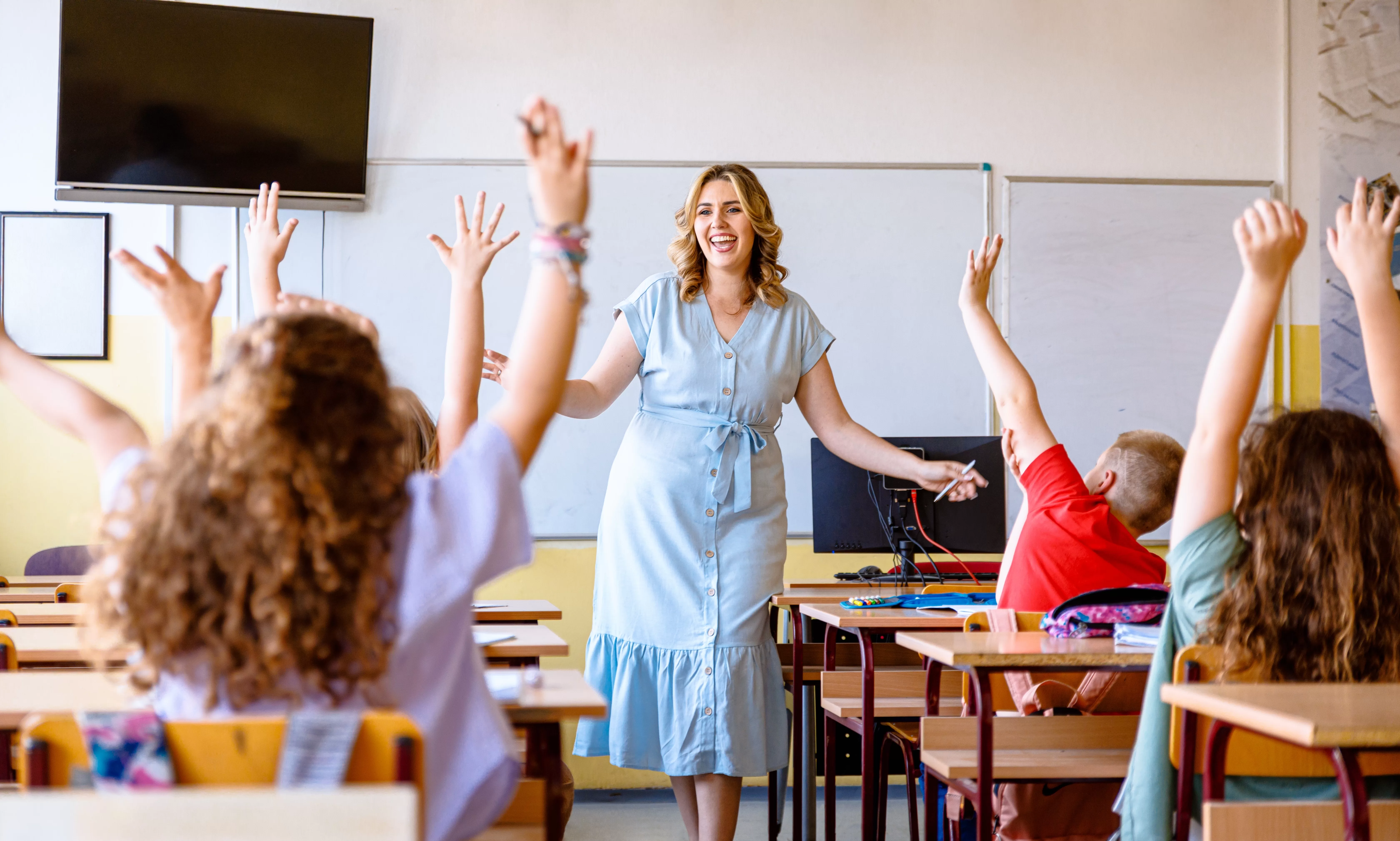
Teaching has the same problem. When you're standing in front of a classroom, you're simultaneously thinking about the lesson, your students, your content, the clock, the student with their hand up, the student who isn't paying attention and whatever needs to happen next. It's incredibly difficult to objectively observe your own practice while you're in the middle of it.
This is something Jim Knight has written and spoken about extensively: teachers need a clear picture of their current reality before they can decide what they want to improve. And one of the most powerful ways to capture that reality is video.
Imagine having match statistics for teaching
Tennis players don't have to rely entirely on how a match felt. They can look at the data:
- First-serve percentage
- Double faults
- Unforced errors
- Winners
- Break points won
- Net points won
The statistics don't tell the entire story, but they give the player and coach something concrete to investigate. In the men's final, Shelton actually won the tiebreak in the second set, however the match still turned in Zverev's favor once the errors piled up over four sets.
We can do something similar with classroom video. Instead of simply watching a lesson and asking, "How did that go?", we can look for specific things:
- How many students responded to questions?
- How much time did the teacher talk compared with students?
- How often did students receive opportunities to respond?
- How long were transitions?
- How many students appeared engaged during a particular activity?
And we can look for the winners too:
- When did student engagement suddenly increase?
- What question generated the best discussion?
- What instructional move resulted in students explaining their thinking?
- What did the teacher do immediately before that happened?
That's an important part of the analogy. The goal isn't simply to find mistakes. It's to find both the errors and the winners and learn from them.
Vosaic provides an AI tool called AI Mate that can analyze classroom video for you. If you don't have a Vosaic account, you can start with a free trial today.
Video changes the coaching conversation
Without video, coaching can easily become a conversation based on recollection:
- "I thought students were pretty engaged."
- "I felt like that discussion went well."
- "I don't think I talked that much."
Those impressions may be completely accurate. But video gives us the opportunity to check.
That's why I like Jim Knight's idea of "capturing reality." The purpose isn't for a coach to watch a recording and compile a list of everything the teacher did wrong. It's to give the teacher and coach the equivalent of match film:
- Watch.
- Notice.
- Collect some data.
- Find what's working.
- Find what's getting in the way.
- Pick something worth improving.
- Try something different.
- Then record again and see what changed.
What would you notice if you watched your own practice?
Now that the US Open is over, it's easy for me, in hindsight, to point to the moments that decided each final — the game Sabalenka couldn't quite hold, the set Shelton let slip away. It's much harder to recognize the same kinds of patterns when I'm the person holding the racket.
I suspect teaching isn't that different. The things that have the greatest impact on our performance aren't always obvious while we're performing. That's why recording your practice can be so valuable.
With Vosaic, teachers can capture classroom video and coaches and teachers can identify, tag, discuss, and analyze specific moments in the lesson. Instead of relying on memory or general impressions, they can go directly to the moments that matter:
- Look for the errors.
- Look for the winners.
- Look for patterns.
And then decide what you want to do differently the next time you step onto the court,or into the classroom.
Because sometimes getting better isn't about completely changing your game. It's about finally being able to see it.
If you don't have a Vosaic account, you can start with a free trial today.